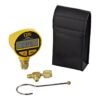
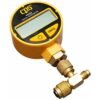
Description
Positive Features of the Digital Vacuum Gauge
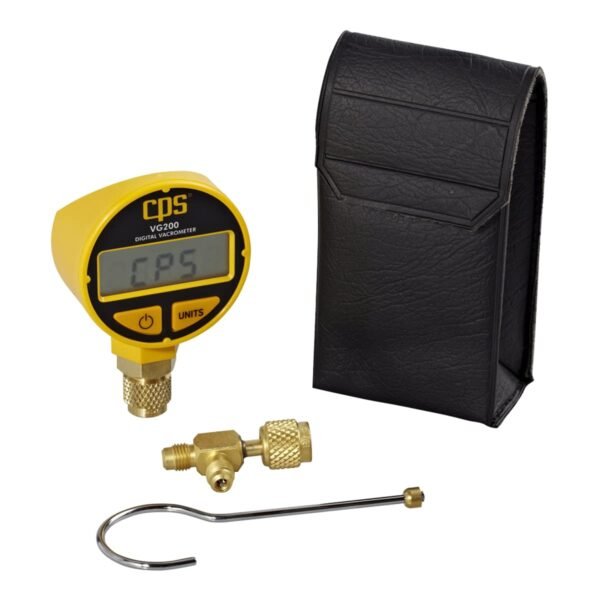
The CPS VG200 Digital Vacuum Gauge is built for HVAC work, and its accuracy is what stands out immediately. Calibrated to strict NIST standards, it delivers precise and reliable vacuum readings across repeated use. That is a must-have when diagnosing refrigeration or HVAC systems where even a small deviation can mean the difference between a successful repair and a recurring problem. The gauge’s advanced sensor, featuring a self-heated thermistor bridge and automatic temperature compensation, ensures that environmental changes don’t throw off the readings. This is a big plus for anyone working in varying conditions like basements, rooftops, or outdoors.
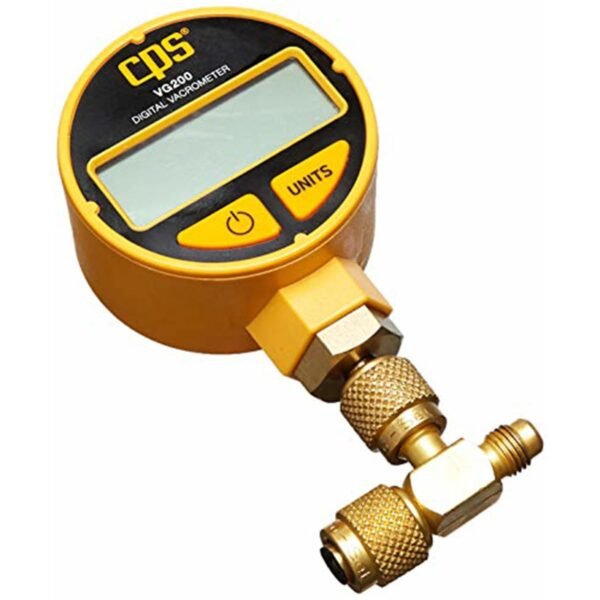
The 5-digit LCD display is a game changer. It’s large and easy to read, which makes monitoring the evacuation process possible without squinting or guessing. The numbers are legible at a glance from arm’s length, which matters when the gauge sits on a manifold. Plus, the user-selectable units, meaning microns, torr, in/hg, or mBar, give the flexibility to work with whatever measurement system you’re comfortable with or that your job requires.
- Calibrated to NIST standards for best-in-class accuracy
- Large, easy-to-read 5-digit LCD display
- Multiple selectable measurement units
- Advanced sensor with temperature compensation
Drawbacks of the CPS VG200 Vacuum Gauge
Despite its many strengths, the gauge isn’t without some quirks. The size of the device, though compact at just under 2 inches by 4.3 inches, is bulkier in the hand than sleeker models. Holding it for prolonged periods can be slightly uncomfortable, especially if you’re moving around a lot during a job. Another issue is the battery life. It runs on a single 9V battery, which powers the screen and sensor, but it drains faster than the spec suggests. Carrying a spare battery is essential if you plan to use the gauge extensively in the field.
Cleaning the sensor is straightforward, and the device is built to withstand up to 400 Psi of positive pressure, which is impressive but also means that it requires careful handling during cleaning to avoid damage. The field cleanable sensor is a fantastic feature, though access can be tricky depending on how the gauge is mounted or positioned during use.
- Slightly bulky for prolonged handheld use
- Battery drains faster than expected
- Sensor cleaning requires careful handling
Design and Build Quality
The CPS VG200 is designed with practicality in mind. Its compact and sturdy frame is solid and durable, which is reassuring when you’re working in rough environments. The digital display is protected enough to avoid scratches and damage, but it’s not completely ruggedized like some industrial-grade models. Still, it handles day-to-day bumps and drops reasonably well. The device’s weight, just over 10 ounces, adds a bit of heft without being cumbersome.
The simple interface is a strength: just a few buttons to toggle units and power on/off, eliminating unnecessary complexity. The self-heating sensor also means it’s ready to go without lengthy warm-up times, which is crucial when you’re rushing between jobs. However, the lack of a backlight on the LCD can be a pain in dimly lit basements or during night work, forcing you to use an external light source, which is where a handheld flashlight earns its place in the bag.
Functionality and User Experience
Operating the vacuum gauge is straightforward, and it covers all sorts of vacuum tests beyond HVAC/R systems, including automotive applications. Electrical faults on the same call fall to a tool such as the Innova 3320 auto-ranging multimeter. The continuous digital readout provides real-time feedback, which is invaluable for diagnosing leaks or verifying system evacuation. The ability to switch between units on the fly is handy, especially when collaborating with technicians who prefer different measurement systems.
An underrated feature is the automatic temperature compensation. It makes the readings more consistent, reducing the guesswork that comes with environmental fluctuations. That stability is what simplifies troubleshooting in less-than-ideal conditions.
Value for Money
Set against other digital vacuum gauges on the market, this one strikes a decent balance between cost and quality. It’s not the cheapest option available, but its accuracy calibration and smart sensor design justify the investment for professionals who need dependable readings. For hobbyists or casual users, it might be overkill, but for anyone serious about HVAC, automotive diagnostics, or refrigeration systems, it’s a solid tool.
The durability and ease of cleaning add to its long-term value, as replacements and repairs can get costly. It is a worthwhile purchase for anyone who needs a reliable gauge with professional-grade accuracy without paying for ultra-premium models that might have features irrelevant to everyday use.
Product Comparisons
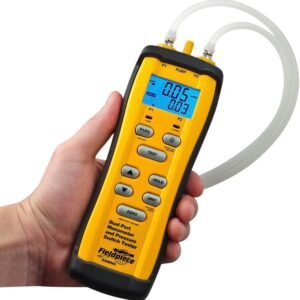
Looking at competitors like the Fieldpiece SDMN6 digital manometer or the Testo 552, the CPS VG200 holds its ground well. The Fieldpiece offers similar accuracy but lacks the 5-digit LCD, which makes the VG200 easier to read during detailed evacuations. Testo’s models sometimes boast more rugged designs and longer battery life, but they come with a higher price tag.
Where the VG200 shines is in its sensor technology and temperature compensation, features that many rivals either don’t offer or implement less effectively. On the downside, some competitors provide backlit displays and more ergonomic shapes, which make them more comfortable for extended handheld use. It’s a trade-off between feature set and user comfort.
Alternative Offerings
If you’re exploring alternatives, you might consider analog vacuum gauges or more specialized digital meters with Bluetooth connectivity. Analog devices are generally less expensive but lack the convenience and precision of digital readouts, which can lead to human error or misinterpretation.
Bluetooth-enabled gauges provide remote monitoring, which the VG200 does not support, but they often come with additional complexity and higher costs. For most professionals and DIYers, the balance of simplicity, accuracy, and durability in this gauge makes it a practical choice, while the Fieldpiece HS33 HVAC multimeter and the Fieldpiece LT17A digital multimeter cover the electrical side of the same service call.
Practical Use Cases and Final Thoughts
The gauge is built for vacuum testing HVAC/R systems and confirming proper evacuation before recharging with refrigerant. Its controls are simple enough that technicians can pick it up without prior experience on the model. The bright LCD and quick unit switching are the two things that make it fast to work with on a call.
The clarity of the digital display combined with the robust build makes it a trustworthy companion on any job site. Just keep in mind the battery life and the lack of backlighting if you’re often in dim conditions. Overall, it’s a practical and reliable tool that performs its core function exceptionally well.