
Description
Highlights of the Klein Tools RT250 GFCI Outlet Tester
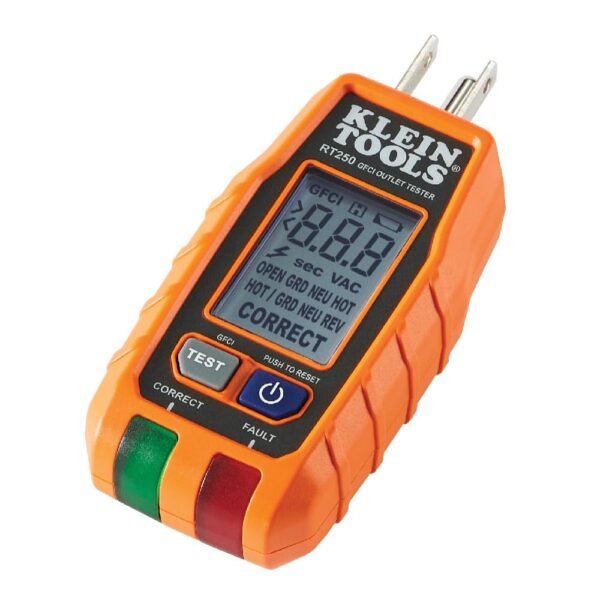
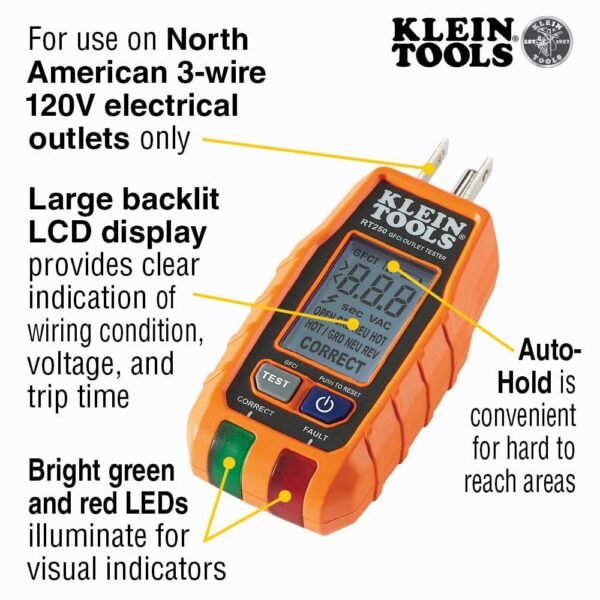
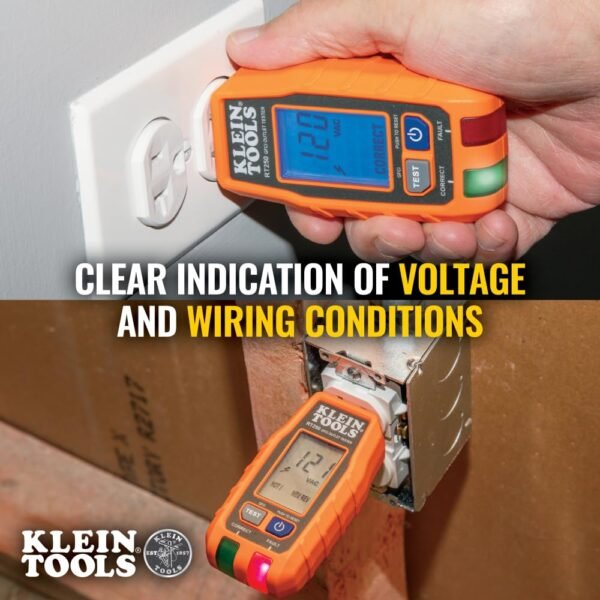
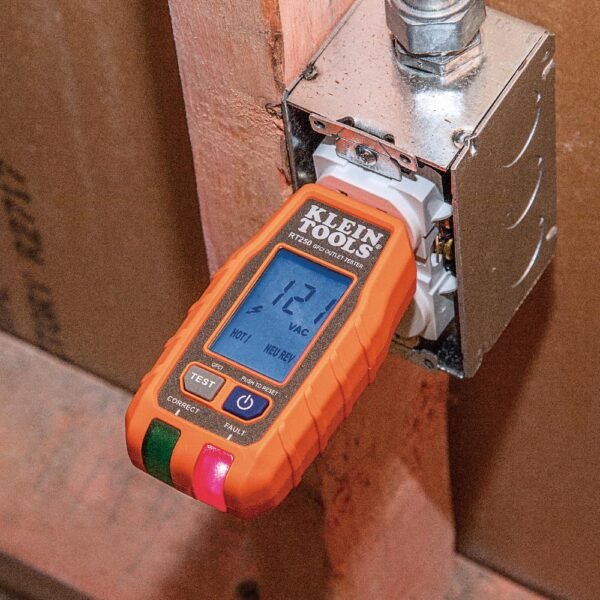
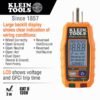
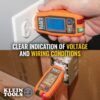
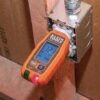
The Klein Tools RT250 GFCI Outlet Tester with LCD Display leads on its readout. The large backlit LCD is the headline feature, making voltage readings clear even in dimly lit spaces. Owner reports return to it repeatedly, because it is far easier to read than the tiny indicator lights on simpler testers. The visible green and red LEDs complement the LCD perfectly, offering an immediate visual cue about wiring conditions without needing to squint or guess.
Another standout is the trip time display for GFCI devices. This feature shows exactly how long the outlet takes to trip, which is what makes troubleshooting and verifying GFCI functionality possible rather than guesswork. It’s one thing to know if a GFCI trips or not, but knowing the trip time adds a layer of precision that’s hard to beat.
- Large, clear backlit LCD display enhances usability
- Trip time display offers precise GFCI testing
- Bright LED indicators provide quick wiring status feedback
Drawbacks to Consider
No tool is perfect, and this tester has its fair share of limitations. The point owners flag most often is the requirement for 2 AAAA batteries. These are not a common size in most homes, and although the package includes them, replacements can be a bit tricky to find. It’s a minor annoyance but worth noting if you want to keep the tester ready for use at all times.
The device size is compact, which is generally a plus, but owner reports describe the grip as too small for larger hands, especially with gloves on. The corded electric power source is reliable but limits mobility compared to cordless testers. It’s something to keep in mind if you’re moving around a lot or working in tight spaces.
- Uses uncommon AAAA batteries which may be hard to replace
- Compact size can be less comfortable for larger hands
- Corded design limits mobility during testing
Comprehensive Feature Set
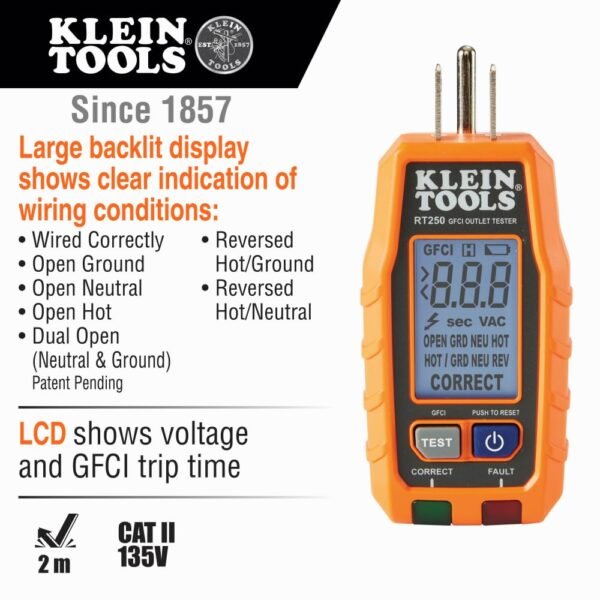
This tester isn’t just about identifying if an outlet is wired correctly; it’s packed with useful functions. The patent-pending open neutral and open ground detection system is what catches the less obvious wiring faults. Most testers at this level either miss those faults or give only a vague indication.
The auto-hold feature is a thoughtful addition. It’s particularly handy when testing hard-to-reach outlets where you can’t keep a close eye on the display. The tester locks the reading, allowing you to move it away and still review the voltage or fault status comfortably.
The CAT II 135V safety rating, explained in the guide to CAT safety ratings, confirms that this tool is rated for use in typical residential and light commercial environments. Safety is paramount, and this rating meets those expectations nicely.
User Experience and Practicality
Owner feedback from people who dabble in DIY electrical projects is generally positive. The clear LCD and LED indicators make it easy for even novices to understand wiring issues without needing to interpret complicated codes. Beginners learning home wiring commonly report finding it intuitive after a short explanation.
One small gripe in the owner record is the manual, which could be more detailed in explaining some of the advanced diagnostics. For a professional or seasoned DIYer, it’s straightforward, but beginners might need to look up additional information online or in forums.
Product Comparisons
Compared to other popular receptacle testers in this class, this one holds its own. For example, basic plug-in testers often rely solely on LED combinations to indicate wiring faults, as does the GFCI check on the Klein ET310 breaker finder, which can be confusing and sometimes inaccurate. The RT250’s digital readout and trip time feature put it a step above these simpler models.
On the downside, some competitors offer wireless or Bluetooth-enabled testers, which can send data directly to your phone or tablet. Those are great for professionals who keep detailed logs or perform frequent inspections. In contrast, this tester sticks to a traditional display, which might feel a bit old-school.
Price-wise, the RT250 sits in the mid-to-upper range, but the enhanced diagnostic features justify that. Cheaper testers won’t catch open neutral or open ground issues reliably, so this one is definitely worth it if accuracy and safety are priorities.
Value Proposition
Considering the features and build quality, this tester delivers good value for money. It’s not the cheapest option on the market but offers more detailed diagnostics than entry-level devices. The inclusion of batteries and the sturdy construction add to the overall package.
For the price, one gets a professional-grade tool that’s reliable and precise, suitable for electricians and serious DIYers alike. The extra safety features and clear display make it a worthwhile investment, especially if you frequently work with GFCI outlets or need to verify wiring conditions comprehensively.
Downsides to Keep in Mind
- Battery type is unusual and might complicate replacements
- Slightly small form factor can feel cramped during extended use
- No wireless connectivity limits modern data logging options
- Instruction manual could use more detail for beginners
Alternative Offerings
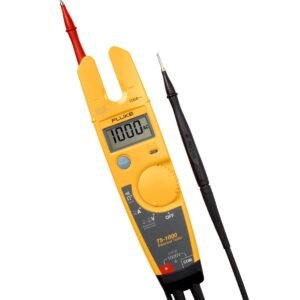
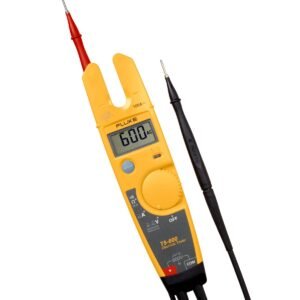
There are several other voltage testers in the market, like the Fluke 1AC-A1-II VoltAlert or the Extech CT70, which offer different strengths. The Fluke is renowned for its ruggedness and ease of non-contact voltage detection, a job also covered by the Amprobe TIC 300 PRO, but lacks the in-depth GFCI trip time analysis found here. The Extech provides multi-function testing including continuity and resistance, which the Klein tester doesn’t handle, though the Fluke T5-600 electrical tester covers voltage, continuity and current in one body.
If your primary need is quick voltage detection and minimal setup, those might suffice, and the comparison of a voltage tester against a multimeter covers where each one stops. However, for anyone needing detailed diagnostics with GFCI trip timing and wiring fault identification, this tester excels. It strikes a balance between professional utility and user-friendly features, making it a solid choice for most electrical troubleshooting tasks.