
Choose a tool bag when you carry a fixed kit on your shoulder and need to see everything at once, a tool box when the load is heavy, dusty, or needs protecting, and a rolling chest when the total weight has passed the point where anyone should be carrying it. The decision comes down to how far you walk, how much the kit weighs, and whether the tools need shielding from the site.
Key takeaways
- Bags win on visibility and speed of access, because open pockets show the whole kit without unpacking anything.
- Boxes win on protection, stacking, and load rating, and sealed models keep dust and rain out.
- Rolling chests move weight that would otherwise wreck a shoulder, but they need a route with no stairs and no rubble.
- Empty weight matters. A bag weighing 9 pounds before you load it costs you carrying capacity all day.
- Water resistant is not waterproof. Check the actual rating before leaving anything outside overnight.
How the three formats actually differ
A soft bag is a fabric shell with pockets. Its advantage is that the kit stays visible and vertical, so a screwdriver lives in a slot you can reach without moving anything else. Weight sits on a shoulder strap, which is fine for a stair climb and unpleasant across a car park. Fabric flexes, so tools rub against each other, and anything with an edge eventually wears the lining.
A rigid box is a moulded shell with a lid. It protects contents from crushing, keeps dust and water out when it carries a seal, and stacks with other boxes, which is the real reason modular systems took over job sites. The cost is that a closed box hides its contents, so you open it and rummage unless you fit dividers and stick to them.
A rolling chest is a box with wheels and a telescoping handle, usually forming the base of a stack. It exists to move a load your back should not, and it solves nothing on stairs, in a loft, or across broken ground. Browse the tool bags category and the tool boxes category to see how each format is built.
Match the format to the trade
Service and diagnostic work favours bags. An electrician or HVAC technician arriving with meters, hand tools, and a handful of parts wants everything visible in one carry, which is what a technician style bag with dual bays is built around. Padded meter pockets exist because clamp meters and thermal cameras do not survive being loose among pliers.
Installation and repetitive work favours boxes. If the day means one location and a large kit, a stack of sealed boxes on a modular base beats several bags, because the stack rolls in as one unit and the contents stay dry. Fasteners, bits, and small parts belong in a compartment organiser rather than loose in a bag bottom. Occasional household use rarely justifies either extreme, and a small canvas bag sized around a compact driver usually covers it.
Weight, payload and the numbers worth checking
Three figures decide whether a container works in practice, and only one of them appears prominently in marketing. Empty weight is the tax you pay before loading a single tool: a large technician bag can start near 9 pounds and a rolling chest close to 38, which is fine when it rolls and painful when it does not.
Payload rating is what the container is built to hold. Large soft bags are often rated around 30 pounds, compact sealed boxes closer to 75 pounds, and rolling chests up to 250 pounds. Exceeding these is how handles tear out and lids crack.
Pocket count is the number everyone quotes and the least useful on its own. Forty seven pockets only help if they match your tools. Ask instead how many take long shanked drivers, whether there is a padded space for a meter, and whether the layout can be reconfigured. Removable panel systems and quick adjust dividers are what turn a pocket count into usable organisation.
Weather protection and site abuse
Ratings here are frequently misread. An IP65 seal on a box means dust tight and protected against low pressure water jets, which covers rain on a truck bed and a hose down at the end of a job. It does not mean submersion. Descriptions that say water resistant without a rating usually mean a shower is survivable and standing water is not.
Fabric bags are more variable. A waterproof base with a treated body handles wet ground and passing rain, but zips are almost always the weak point. Impact protection follows the same logic: a moulded shell with metal reinforced latch points survives being dropped off a tailgate, and a canvas bag does not. Loading matters as much as the container. Keep heavy items low and central, sheath sharp edges, and never carry a loaded bag or box up a ladder by hand, as set out in the ladder safety guide.
Options from this catalog
- Veto Pro Pac TECH PAC: a backpack style technician bag with 46 pockets, a patented dual bay centre panel, weatherproof base and body fabric, and a padded strap. Suits service technicians carrying meters and hand tools together, though it starts around 9 pounds empty with a single handle.
- Veto Pro Pac TP-XXL: 47 pockets in a 15 by 15 by 8 inch shell, with a V-SWAP removable panel system, two padded meter pockets, and a rear tablet pocket. Good for anyone who swaps kit between job types, with 5.5 pounds empty weight and a 30 pound payload limit.
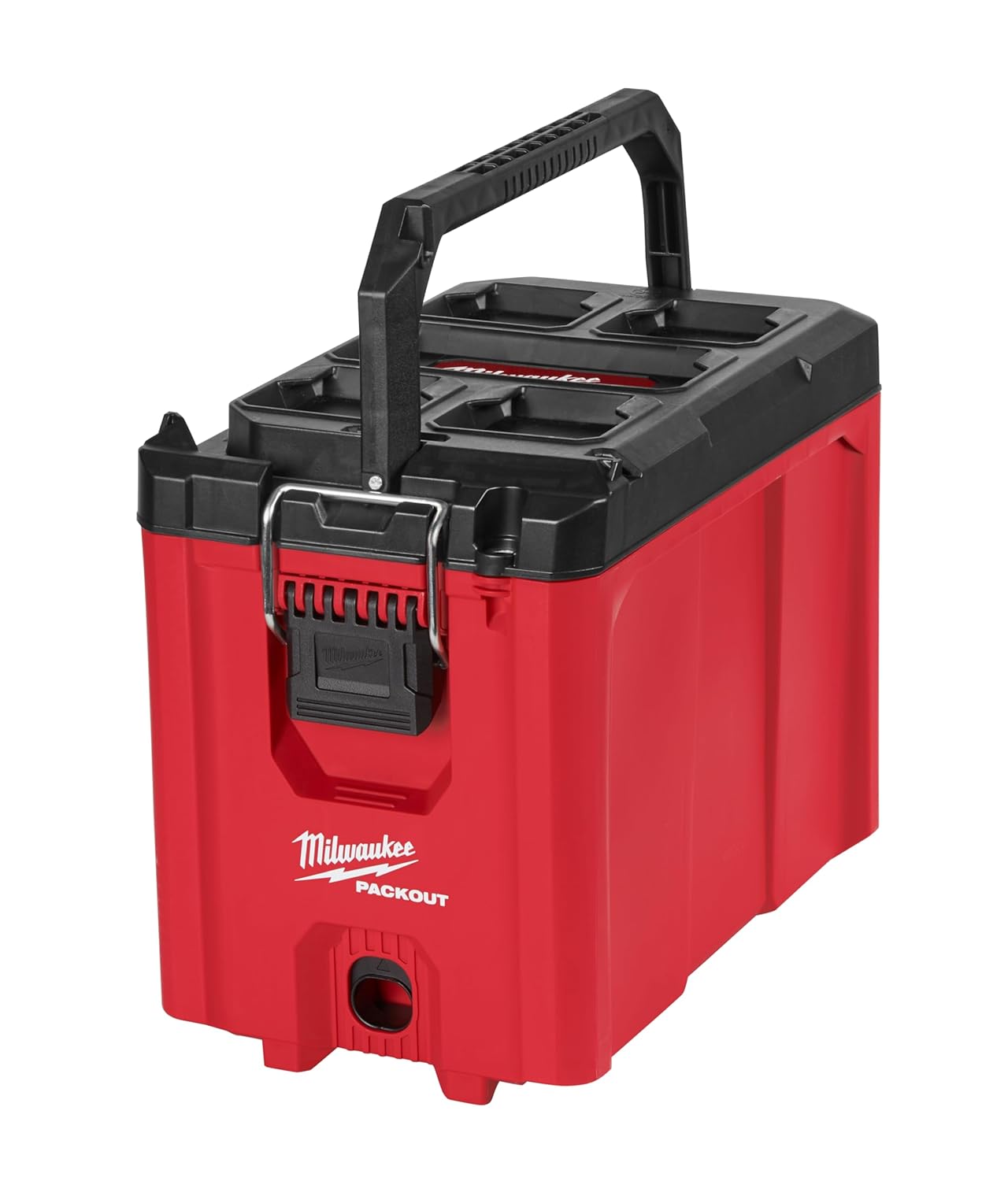
- Milwaukee 48-22-8422 PACKOUT compact box: an impact resistant shell with an IP65 rated seal, 11 compartments, quick adjust dividers, metal reinforced locking points, and a 75 pound capacity at 16.2 by 10 by 13 inches. Suits someone building a stackable modular system.
- Milwaukee 48-22-8428 PACKOUT rolling chest: 40 by 24 by 17 inches, rated to support up to 250 pounds, on wheels with a sturdy handle. Suits a large fixed kit moved by trolley, though it weighs roughly 37.6 pounds empty, which makes solo lifting into a truck bed awkward.
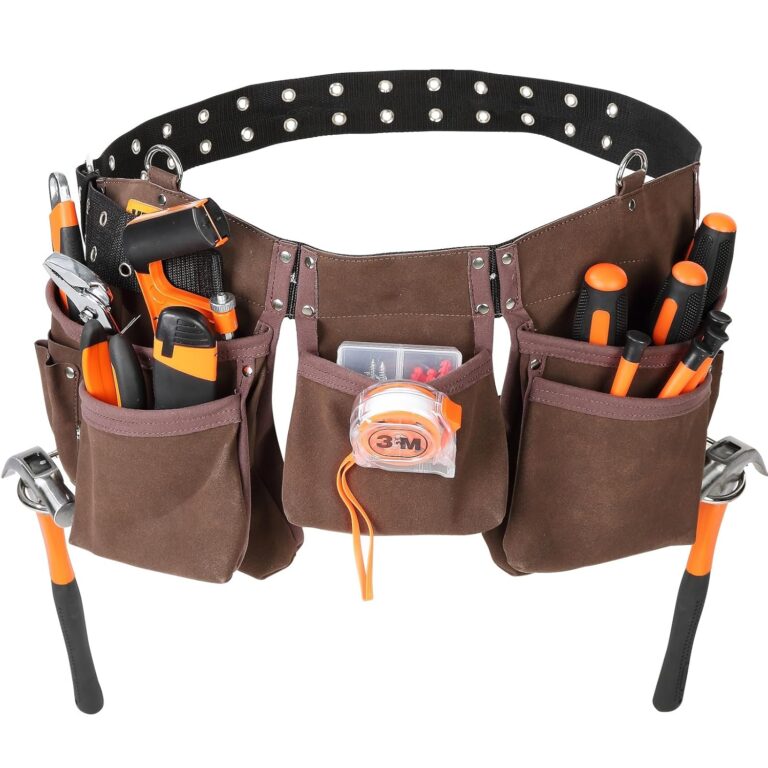
For a much smaller carry, the Milwaukee 13 by 6 by 8 inch canvas bag is a single compartment option at just over 10 ounces, rated to about 20 pounds. Belt carry is a separate question, covered in the guide to setting up a tool belt.
Frequently asked questions
Is a backpack style bag better than a shoulder bag?
For long carries and ladder work, a backpack spreads load across both shoulders and keeps hands free. Shoulder bags are quicker to open on the ground and easier to work out of at a bench.
Do modular box systems lock the buyer into one brand?
Largely yes, because stacking interfaces are proprietary. Decide on the system before buying several boxes, since mixing platforms defeats the stacking that makes them worthwhile.
Where should small parts and fasteners live?
In a dedicated compartment organiser with removable bins, not loose in a bag. Organisers stack inside a box and stop screws migrating into the bottom of every pocket.
How should meters be carried?
In a padded pocket or a case, never loose. Dropped meters can suffer damage that is not visible from outside, which is why the multimeter walkthrough starts with inspecting the meter and its leads.