Description
Positive Features That Make It Stand Out
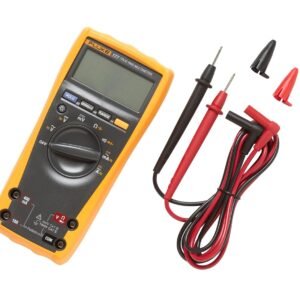
The Fluke 115 Digital Multimeter is packed with practical benefits that any field service technician or electronics enthusiast would appreciate. Its True-RMS voltage and current measurement capabilities make it reliable for accurate readings even on complex, non-linear loads. The large, backlit 6000-count digital display provides crystal-clear visibility, which is a lifesaver during late-night troubleshooting or working in dimly lit spaces. The Min/Max/Average recording function captures signal fluctuations effortlessly, which is exactly what diagnosing intermittent issues calls for. The inclusion of 4mm silicone test leads and an easy-open battery door adds to the convenience, allowing quick setups without fumbling. Plus, the meter’s CAT III 600V safety rating speaks to its robustness and safety on job sites with high voltage.
- True-RMS readings ensure accuracy on complex signals
- Backlit display enhances usability in low light
- Min/Max/Average functions for detailed diagnostics
Areas for Improvement
Despite its many merits, the device isn’t without flaws. The weight and bulkiness stand out, since it is heavier than other compact multimeters in this class, which can be tiring during extended use. The absence of a built-in stand means you constantly need to hold it or find a surface to prop it up, which sometimes slows down workflow. While the test leads are durable, their length is somewhat limiting when working inside tight panels or awkward spaces. Additionally, although the backlight is bright, its battery consumption seems a bit high, so frequent replacements might be necessary if you rely heavily on it. Lastly, the lack of Bluetooth or wireless connectivity feels like a missed opportunity for modern convenience, especially when logging measurements on the go.
- Heavier than some competitors, affecting long-term comfort
- No integrated stand for hands-free operation
- Battery life could be better with backlight usage
Design and Build Quality: Rugged Yet Practical
The multimeter’s compact design fits nicely in the palm, making it easy to maneuver around electrical panels and tight spots. Its yellow rugged casing isn’t just for looks: it resists wear and tear, which shows after a few accidental drops. The holster included with the kit adds an extra layer of protection and grip, making it less likely to slip during use. The sturdy feel and the simple, intuitive dial and button layout mean even beginners can navigate it without a manual. The easy-to-access battery compartment is another thoughtful touch; switching batteries doesn’t require tools or disassembling parts. Overall, the design balances durability with practicality quite well.
Performance and Accuracy in Real-World Use
The multimeter covers a wide test range, from AC/DC voltage up to 600V and current up to 10A through resistance, continuity, frequency, and capacitance. It handles all these tasks with impressive consistency. The True-RMS technology makes the readings trustworthy, especially on non-linear loads like variable-speed drives. The continuity test is straightforward, with a clear audible beep that saves time. One particularly useful feature is the auto-ranging capability, which reduces the hassle of manual adjustments and helps avoid measurement errors. However, the 20A range is only supported for 30 seconds, a limitation to keep in mind when dealing with higher current circuits. Despite that, its performance for everyday electrical troubleshooting and electronic testing is solid.
Value Proposition: Is It Worth the Investment?
This multimeter offers a balance of professional-grade features and ruggedness without tipping into the premium price bracket of specialized equipment. Its versatility for both industrial and home applications means you’re not just buying a tool but an investment in reliability and safety. While some competing models might offer wireless data logging or a sleeker design, this meter’s reputation for accuracy and durability is well-earned. If you’re a field technician or serious DIYer looking for a dependable general-purpose multimeter, it delivers excellent cost-effectiveness. The included accessories, such as the test leads, holster, and battery, add to its upfront value. However, if you want cutting-edge tech like Bluetooth or longer test lead cables, you might want to explore other options.
Product Competitors: How It Stacks Up Against Rivals
Comparing this multimeter to popular alternatives like the Klein Tools MM600, the Klein Tools MM420 and the Extech EX330 reveals some interesting trade-offs. The Fluke 115 excels in True-RMS accuracy and ruggedness, and its safety certifications (CAT III 600V) are top-notch, making it ideal for professional environments. On the other hand, the Klein model offers slightly longer test leads and a built-in stand, both of which are missing here. The Extech provides more functions such as temperature measurement but doesn’t match the Fluke’s build quality and reliability. For those prioritizing durability and accurate voltage/current readings, this multimeter edges out most competitors. However, if budget and extra features like temperature or wireless capabilities are your focus, one of the rivals may suit better.
How It Lands with Different Users
The consistent read on this meter is that it is a workhorse that gets the job done without fuss. The backlit display earns its keep on late-night troubleshooting calls in dimly lit basements, and the straightforward interface makes it easy to teach someone new the basics of electrical testing. For DIY electronics, its compact size and safety features are reassuring for a beginner. The bulk and weight are the common complaint, closer to carrying a brick than a pocket meter, but the trade-off is widely accepted for the durability offered.
Downsides That Could Affect Your Choice
Despite the many strong points, a few issues might make users hesitate. The absence of wireless data transfer limits modern workflow integration, especially for those who like to keep logs on mobile devices. The heavier weight and lack of a stand could cause hand fatigue during extended testing sessions. Also, the battery life drops noticeably when using the LED backlight, which means carrying spare batteries or recharging often. Another minor gripe is the test lead length, which is restrictive in cramped workspaces. Lastly, the 20A current measurement limit for short bursts only means it’s not suited for continuous high-current applications, something industrial users should consider.
- No wireless connectivity for data logging
- Heavy and lacks a hands-free stand
- Battery drains faster with backlight on
- Test leads somewhat short for tight spaces
This device pairs real accuracy and ruggedness with a few ergonomic and modern feature gaps. It fits well in the toolbox of anyone needing a reliable, versatile multimeter without breaking the bank on bells and whistles.