
A ladder duty rating is the total weight the ladder is built to carry, counting the climber plus clothing, tools and anything being carried up, and the ANSI classes run from Type IAA at 375 pounds down to Type III at 200 pounds. Falls are the dominant injury in this category, and most of the avoidable ones trace back to two things: a ladder set at the wrong angle, and a load that exceeded the rating on the label.
This guide covers what each duty class permits, the standard angle rule for a leaning ladder, and why the top step of a stepladder is not a standing surface. The manufacturer label on the side rail is the authority for any specific ladder, and it overrides any general guidance here.
Key takeaways
- ANSI duty classes: Type IAA 375 pounds, Type IA 300 pounds, Type I 250 pounds, Type II 225 pounds, Type III 200 pounds.
- The rating is a total load. Body weight plus boots, tool belt, and the material going up all count against the same number.
- Set a leaning ladder using the four to one rule: one foot of base offset for every four feet of working length, giving about 75 degrees.
- Maintain three points of contact while climbing, and never stand above the highest standing level marked on the ladder.
ANSI duty ratings explained
The ANSI ASC A14 standards assign every ladder a duty class, printed on the side rail label alongside the maximum standing level. Type IAA is special duty at 375 pounds, Type IA is extra heavy duty at 300 pounds, Type I is heavy duty at 250 pounds, Type II is medium duty at 225 pounds, and Type III is light duty at 200 pounds, the class most household step stools fall into.
The number is not a body weight limit. It is a total load limit, and the arithmetic adds up faster than most people expect. A 210 pound climber in work boots with a loaded tool belt and a gallon of paint is realistically near 250 pounds, which puts a Type II ladder over its rating before any material goes up.
Duty class is separate from length and from material. Aluminum is light and conducts electricity, fiberglass rails do not conduct and weigh more, and both are made in every duty class. For work near live conductors, rail material is the deciding factor rather than the duty rating.
Setting a leaning ladder at the right angle
The standard is the four to one rule. For every four feet of working length between the base and the upper support point, move the base one foot out from the wall, so a ladder touching a wall 16 feet up sits with its feet four feet back. That geometry produces an angle close to 75 degrees, the balance point between a ladder that slides out at the base and one that tips backward.
A quick field check: stand with toes against the feet of the ladder and extend both arms straight forward. At the correct angle the palms reach a rung at shoulder height. The base also needs a firm, level surface, and where a ladder reaches a roof or platform the rails should extend at least three feet above that landing so there is something to hold while stepping across.
Stepladders, standing levels and reach
Every stepladder is labeled with a highest standing level, and it sits below the top cap. The top cap and the step beneath it are structural, not standing surfaces. Standing higher than the marked level removes the handhold that keeps the body inside the rails, which is where most stepladder falls start.
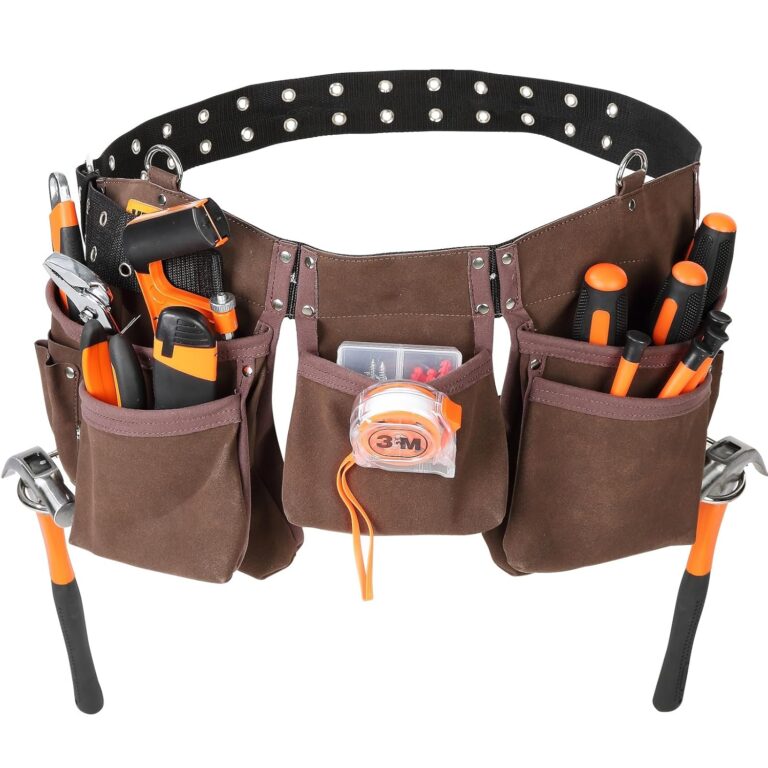
Reach figures work the same way. A telescoping ladder extending to 14.5 feet is commonly quoted with a working reach of about 18 feet, because that figure assumes an average person at the highest permitted level with an arm raised, so compare extended length against extended length instead. Belt tools rather than carrying them, using the layouts in the notes on tool belt setup, and remember belt weight counts toward the duty rating.
Feet, stabilizers and platforms
Slip resistant feet are the contact patch for the whole system, and worn, cracked or missing pads are a reason to retire a ladder. Check them before each use along with rungs, rails and locks.
A stabilizer bar widens the top contact and holds the rails off a wall, gutter or window frame. The Werner 97P stabilizer shows the specifications to check: spans of 49, 57 or 65 inches, standoff distances of 12 or 29.5 inches, and a 250 pound load capacity. That last figure is its own limit and does not raise the rating of the ladder it is fitted to, and the manufacturer has discontinued it.
Clip on work platforms give a broad standing surface instead of a narrow rung, and carry their own load rating separate from the ladder. Accessories only fit the models the manufacturer lists.
Four options from the review catalog
Four ladders across three duty levels. Wider selections sit in the step ladders and extension ladders categories.
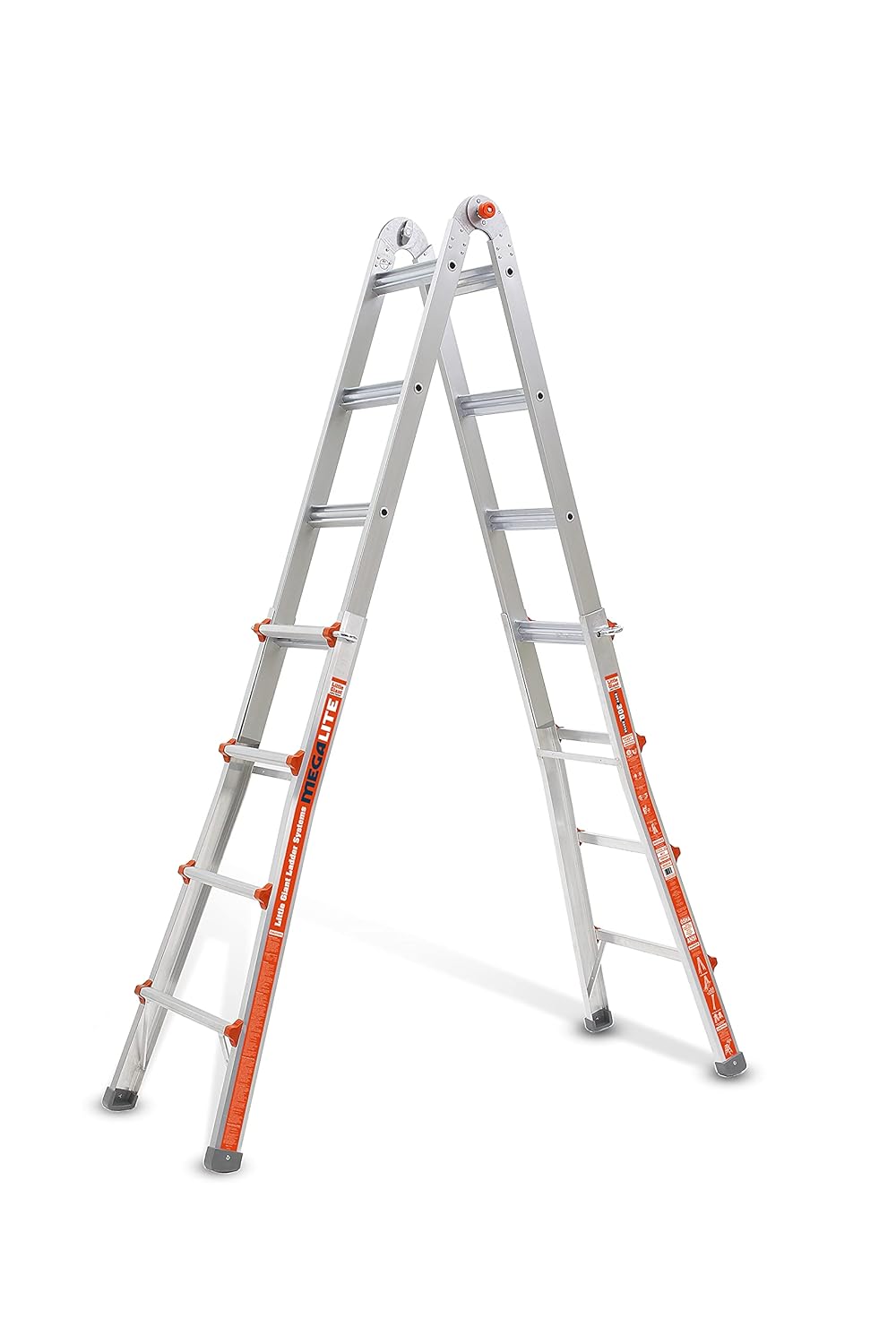
- Little Giant Megalite M17. A Type IA aluminum system rated to 300 pounds, converting into 24 configurations and folding to just over four and a half feet, with Tip-N-Glide wheels. It suits stairs, A frame and extension work from one ladder, at about 31 pounds to carry.
- Telesteps 1800EP. A telescoping aluminum ladder rated to 300 pounds, extending to 14.5 feet with a stated reach of 18 feet and retracting to 33 inches on silicone pivoting feet. It suits jobs where storage space is the constraint, and sections must be fully engaged before loading.
- Polder two step stool. An aluminum folding stool rated to 225 pounds at just under nine pounds, folding to about 2.75 inches with a top step at 1.4 feet. It suits cabinet height work in a home where the stool has to disappear behind a door.
- Rubbermaid Roughneck step stool. A single step plastic stool rated to 300 pounds, 12.5 by 15.5 by 9.5 inches, with skid resistant top and feet. It suits a fixed spot in a kitchen or workshop, and it does not fold.
Much of the work done from a ladder is inspection work: tracing a circuit at a high junction box, covered in the guide to finding a circuit breaker, or scanning a roofline for temperature differences, covered in the thermal imager guide.
Frequently asked questions
Does the duty rating include tools?
Yes. The rating is the total load on the ladder, which means the climber, clothing and footwear, the tool belt and its contents, and any materials carried up or hung from the ladder.
How far should an extension ladder stand from the wall?
One foot out for every four feet of working length, which places the ladder at roughly 75 degrees. A 20 foot working length puts the base five feet from the wall.
When should a ladder be retired?
When rails are bent or cracked, rungs are loose, locks or rope and pulley hardware do not engage fully, feet are worn through or missing, or the ladder has been dropped or struck. Follow the manufacturer instructions, since damaged ladders are generally not repairable in the field.