Description
Robust Design and User-Friendly Interface
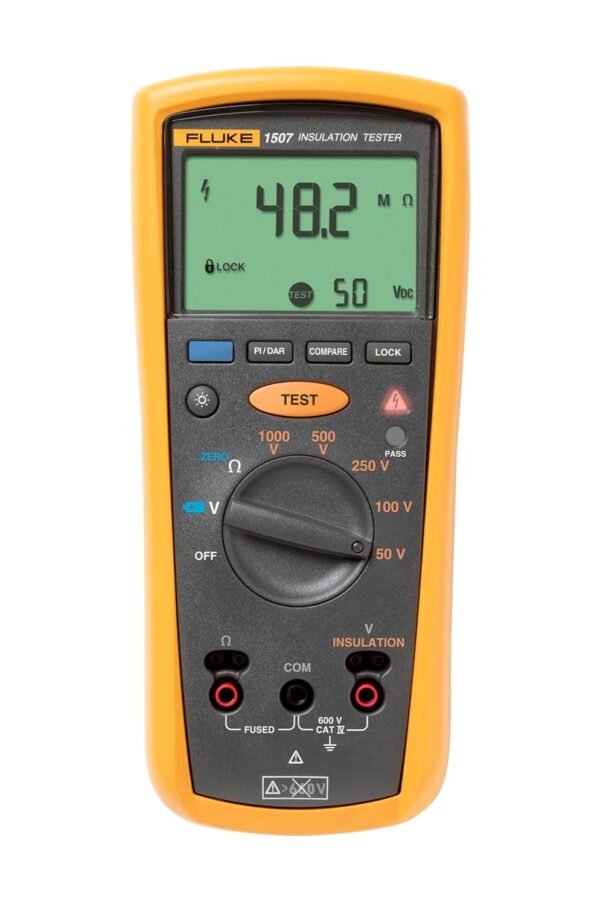
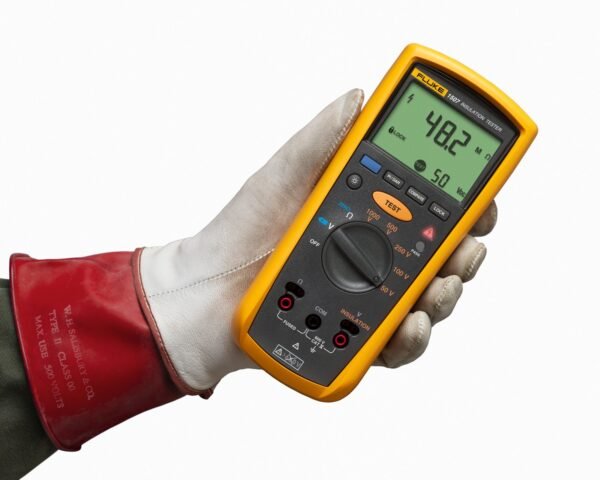
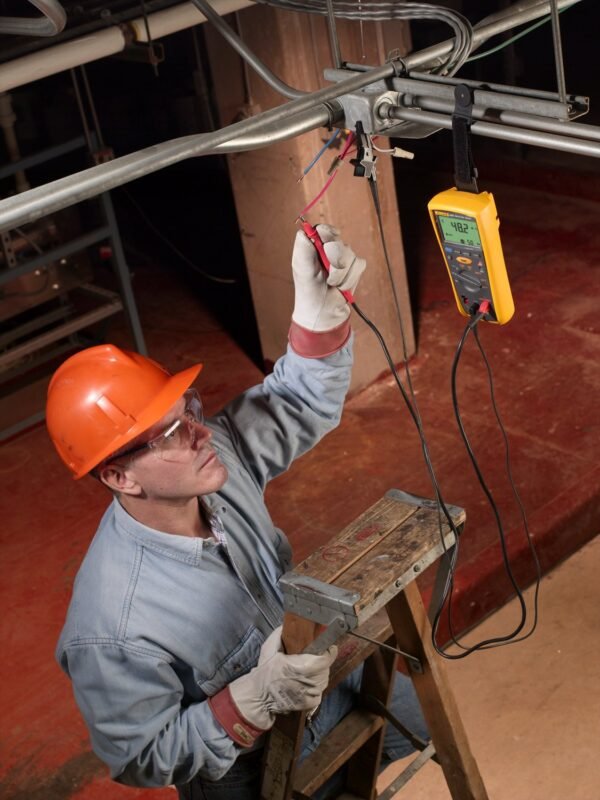
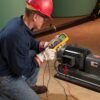
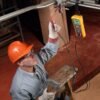
Among insulation testers, the Fluke 1507 Digital Megohmmeter Insulation Resistance Tester stands out with its rugged yet compact build. The bright yellow casing and solid plastic housing give it a durable feel well matched to industrial environments. At roughly 3.2 pounds and dimensions of 11.75 x 5.9 x 2.9 inches, it’s not the lightest gadget out there, but it’s manageable enough to carry around a job site without feeling cumbersome. The large backlit display is a real strength, especially in dimly lit basements and electrical closets where many testers falter. Reading measurements clearly, even in poor lighting, saves time and eye strain.
Multiple Test Voltages and Safety Features
This tester comes with five insulation test voltage options: 50V, 100V, 250V, 500V, and 1000V, which cater to a range of applications from basic troubleshooting to advanced industrial needs. That variety is genuinely useful because switching between voltages is straightforward, tailoring tests precisely to different insulation materials and systems. The live circuit detection feature is a lifesaver. It prevents testing if the voltage exceeds 30 volts, adding an essential layer of protection that reduces the risk of damaging the tester or causing injury. Accidental insulation tests on live circuits are a common field mistake, so this built-in safeguard matters.
Advanced Measurement Functions and Automation
One of the most impressive aspects is the automatic calculation of polarization index (PI) and dielectric absorption ratio (DAR). These parameters are crucial for assessing insulation condition over time, and having them calculated automatically saves a ton of manual math and potential errors. The Compare (Pass/Fail) function is another time-saver, especially during repetitive testing scenarios. It quickly identifies whether insulation readings meet predefined thresholds without recording each value by hand. This feature is particularly handy when working on multiple pieces of equipment, making the tedious parts of insulation testing far less painful.
Convenience of Accessories and Battery Life
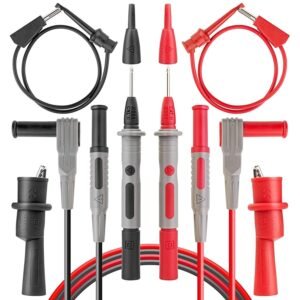
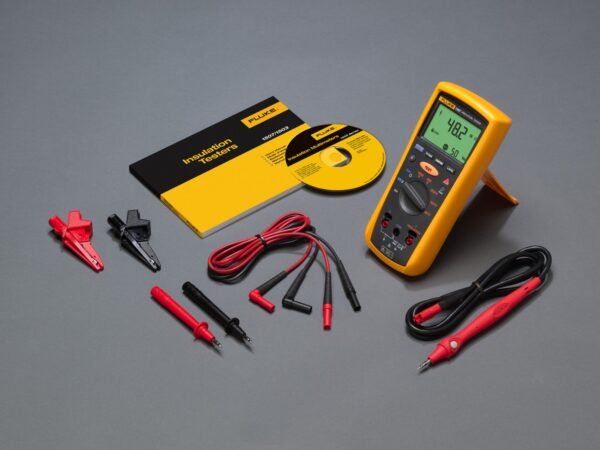
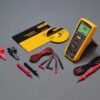
The kit includes remote test probes, TL224 test leads, TP74 test probes, and alligator clips, which cover pretty much every testing situation in the field. The remote probe is especially handy for hard-to-reach spots, keeping the main unit in a safe, easily viewable position. Battery life is decent; on the included alkaline batteries, the unit is rated for over 1000 insulation tests before needing a replacement. The auto power-off feature also helps conserve battery, which matters on all-day site work. The unit is solid and reliable, which aligns with Fluke’s reputation for professional-grade tools.
Downsides and Areas for Improvement
Despite the many good points, the tester isn’t without its quirks. The weight and size could be a drawback for those who prefer ultra-portable devices, especially when lugging multiple tools around. The remote probe cable length might feel a bit limiting in larger industrial setups, where a longer lead would avoid awkward positioning. Another minor gripe is the lack of integrated data logging or Bluetooth connectivity. For professionals who need to track and store test results digitally, this model is somewhat basic compared to newer smart meters. Lastly, the price point is on the higher side, which might deter hobbyists or casual users, although professionals will likely find it justified given the features.
Positive Features
- Multiple test voltages (50V to 1000V) for versatile applications
- Automatic calculation of polarization index and dielectric absorption ratio
- Large, backlit display for easy reading in all lighting conditions
- Live circuit detection enhances user safety
Drawbacks
- Relatively heavy and bulky compared to some competitors
- Remote probe cable length could be longer for certain environments
- No integrated data logging or wireless connectivity
- Higher price point may not suit casual users
Comparing to Popular Competitors
The Fluke 1507 holds its own against other insulation testers like the Megger MIT series or the Kyoritsu models. The safety features, especially live voltage detection and auto-discharge of capacitive voltage, are more refined on this Fluke tester, making it better suited for handling high-voltage industrial environments. The automatic PI and DAR calculations are not always standard with competitors, which often require manual calculations or additional software, so this model simplifies the workflow. However, if you’re looking for a lighter, more portable unit with wireless features, some newer competitors might edge it out. The Megger MIT520, for example, offers Bluetooth connectivity and data logging, which the Fluke 1507 lacks. On the flip side, Fluke’s build quality and sturdy design are more robust, which counts for a lot when the unit takes a beating on tough job sites.
Price Worthiness and Value Proposition
The price tag can feel steep upfront, but considering the wide range of insulation test voltages, accuracy of +/-0.5%, and the suite of included accessories, this tester delivers solid value for professionals who need reliable and efficient insulation resistance testing. Its rugged construction and user-friendly interface justify the investment if you perform insulation testing regularly. For occasional or hobbyist users, however, a simpler and cheaper model might suffice, especially if advanced features like PI and DAR calculations aren’t necessary. The one-year warranty offers some reassurance, though longer coverage would be a nice bonus in this price range.
Practical Use and Field Reports
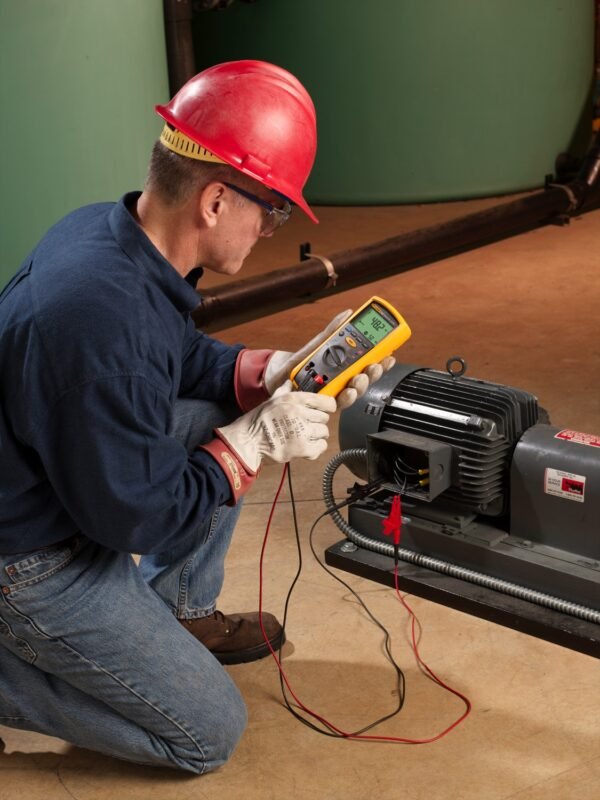
Owner reports cover a variety of tasks, everything from commissioning new electrical systems to troubleshooting old insulation faults. The remote probe is invaluable for hard-to-access panels, while the Compare function speeds up repetitive testing without sacrificing accuracy. Apprentices also find it easy to operate because of the straightforward controls and clear display. One caution that comes up repeatedly: switching between test voltages requires careful attention, since a quick glance at the dial can cause confusion. The auto power-off prevents drained batteries when the device is accidentally left on overnight, a small but appreciated feature.
Overall, the Fluke 1507 Digital Megohmmeter Insulation Resistance Tester blends professional-grade safety, versatile testing options, and automation features in a package that’s built to endure the demands of electrical maintenance and industrial inspections. It has clear limitations, but it is a reliable tool that earns its place in a working kit.