
Almost every flashlight sold today runs on one of four things: a built in lithium cell charged over USB-C, a removable 18650 or 21700 lithium cell, common AA or AAA cells, or a cordless tool battery. Which one suits you comes down to a single question, whether you want the convenience of plugging the whole light in, or the ability to swap a flat cell in the field and keep working.
Key takeaways
- An 18650 is a lithium ion cell measuring 18mm by 65mm, nominally 3.6 to 3.7 volts, typically 2000 to 3500 mAh. The 21700 is the larger successor, commonly 4000 to 5000 mAh.
- Built in cells charged over USB-C are the easiest to live with, but a flat light has to stop and charge.
- AA and AAA cells suit low output lights, emergency kits and anything that sits unused for months.
- Dual fuel designs hedge both ways, running a rechargeable cell or a standard one.
- Lithium cells last longest stored part charged, away from heat, and charged with the charger the manufacturer specifies.
Built in lithium cells with USB-C charging
This is now the default for pocket lights. The cell is sealed inside, and the light charges from the same cable as a phone. There is nothing to buy, nothing to insert the wrong way round and no charger to lose.
The Fenix E06R is a clear example: a keychain light with a 700 lumen output, a full recharge in about 2 hours, and roughly 1 hour 20 minutes of runtime at its highest setting. The Klarus E5 uses a 450mAh cell that charges in about 1.5 to 2 hours and gives around 6.5 hours at medium output. The Nitecore TINI 2 adds an OLED display that reports battery voltage and remaining runtime, though the charging cable is not supplied in the box.
The trade-off is simple. When a sealed light runs flat halfway through a job, the job stops.
Removable 18650 and 21700 cells
The 18650 is the workhorse of enthusiast flashlights. The name is the size: 18mm diameter, 65mm long. Nominal voltage sits around 3.6 to 3.7 volts, and capacity for good quality cells generally falls between 2000 and 3500 mAh. The 21700 is the same idea in a fatter, longer body, usually 4000 to 5000 mAh, which is why high output lights have been moving to it.
The advantage is that a spare cell in a pocket is a full second runtime. The Streamlight 88066 ProTac Rail Mount HL-X in the tactical flashlights category is dual fuel: two CR123A lithium primaries or a single 18650 rechargeable, with roughly 1.25 hours on high from the CR123As and about 1.5 hours from the rechargeable. The sofirn SP36 Pro takes the multi cell route, running three cells behind a single 8000 lumen emitter array while still charging over its own USB-C port.
Removable cells bring responsibilities. Use cells from a reputable supplier, keep spares in a case rather than loose with keys or coins, and retire any cell with a torn wrapper or a dented casing.
AA, AAA and CR123A
Standard cells have one large advantage: you can buy them anywhere, at any hour. That makes them a sensible choice for glovebox lights, emergency kits and anything stored for long periods.
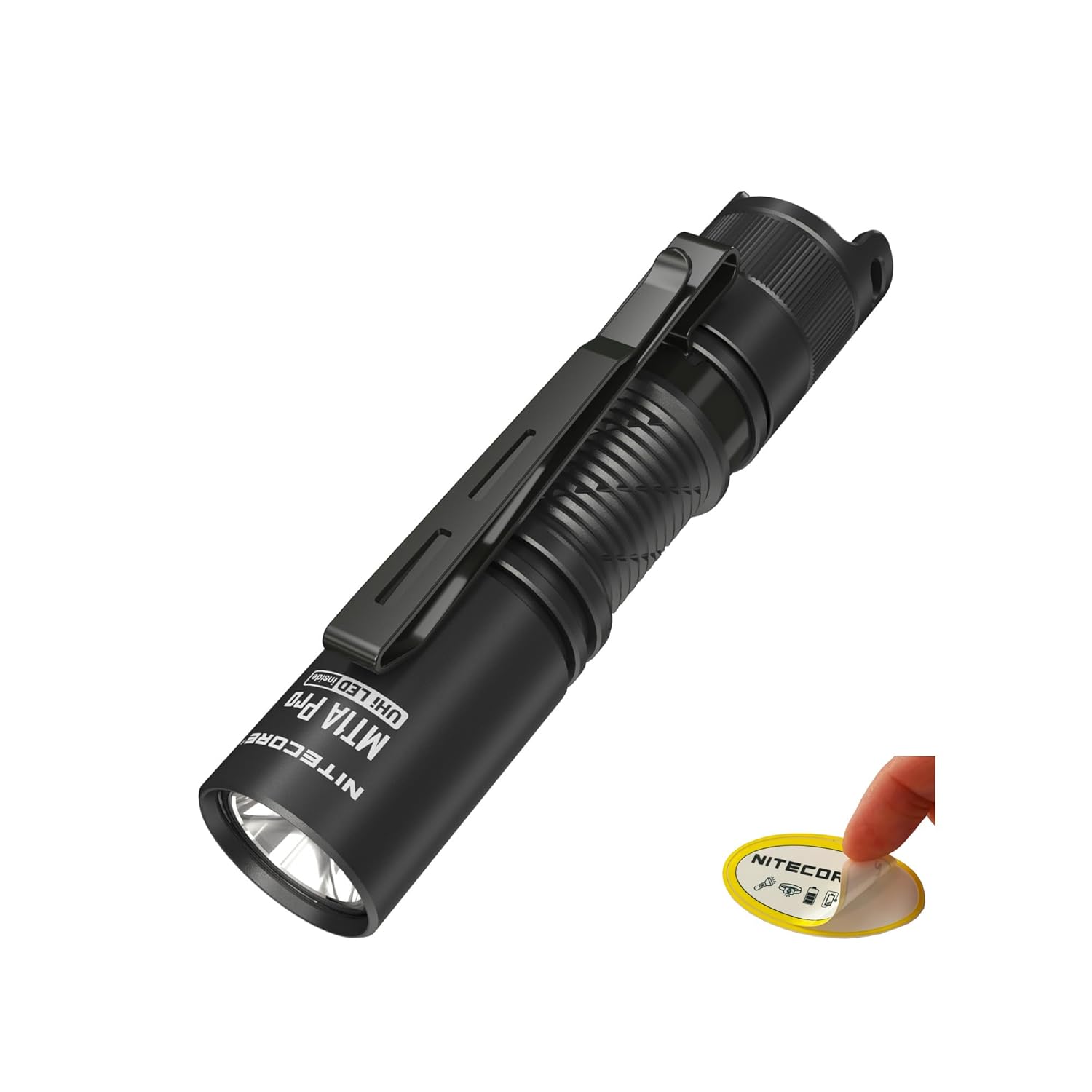
The Streamlight 66318 MicroStream runs about 2 hours at 45 lumens on a single AAA alkaline. The Pelican 3410M uses three AA alkaline cells to deliver 653, 97 and 25 lumen modes with runtimes of roughly 5, 19 and 61 hours. The Nitecore MT1A Pro sits in both camps, charging over USB-C or accepting a standard AA.
CR123A is a 3 volt lithium primary with a long shelf life and good cold weather behaviour, which is why it appears in duty and tactical lights. The Streamlight 66320 MacroStream ships with one alongside its rechargeable option.
Cordless tool packs and service batteries
If you already own a cordless tool platform, a light that takes the same pack is the cheapest runtime you will find. The Makita DML812 runs on the 18V LXT system and is quoted at up to 7 hours of continuous spotlight mode with a 5.0Ah pack. The battery is sold separately, which is only a saving if the packs are already in the van.
Duty lights often use their own service packs rather than loose cells. The Streamlight 75375 NiMH battery is a 2.2 Ah pack that charges in about 2.5 hours and fits a range of Stinger flashlights, with the UltraStinger among the exceptions. The charger is not included.
Charging, storage and safe handling
Lithium cells are safe in normal use and unforgiving of abuse. Follow the manufacturer’s instructions for your specific light and cells rather than general advice, and take these standard precautions.
- Charge with the cable or charger the manufacturer specifies, and do not leave a light charging unattended overnight if the instructions advise against it.
- Do not mix old and new cells, or different brands and chemistries, in a multi cell light.
- Never charge a cell that is swollen, dented, hot or has a damaged wrapper. Recycle it at a proper collection point.
- Store spare lithium cells around half charge, at room temperature, in a case that keeps the terminals apart.
- Close the charging port cover before the light goes anywhere wet. The seal only works when it is shut.
Four lights, four power strategies
- Nitecore MT1A Pro: 800 lumens, USB-C rechargeable or a standard AA. Suits anyone who wants rechargeable convenience with a shop bought fallback. Note about 1 hour of runtime at full output.
- Fenix E06R: sealed cell, USB-C, 700 lumens in a 3.2 ounce keychain body. Suits people who charge things nightly and value size over swappability.
- Streamlight 88066 ProTac Rail Mount HL-X: runs an 18650 or two CR123A cells. Suits users who need a spare set of cells rather than a charging break.
- Makita DML812: 18V LXT packs, up to 1250 lumens combined output. Suits trades already invested in the platform. At 2.64 pounds it is a work light, not a carry light.
FAQ
Can I put an 18650 in a light designed for AA cells?
No. An 18650 is physically larger and runs at roughly 3.7 volts against 1.5 volts for an alkaline AA. Only use the cell types listed in the manufacturer’s instructions for that light.
How long does a rechargeable flashlight cell last?
Lithium ion cells are usually rated in charge cycles rather than years, and capacity fades gradually with use, heat and time spent at full charge. A noticeably shorter runtime than when new is the usual sign it is time to replace the cell.
Is USB-C charging faster than a separate charger?
Not necessarily. Onboard charging is more convenient, but a dedicated external charger can often deliver more current and lets you charge a spare cell while the light is in use.
Which battery type should I choose?
Sealed USB-C for a light you carry daily, removable cells for long shifts, standard AA or AAA for kit that sits in storage. There is more on matching a light to the job in how to choose a flashlight and on output figures in lumens explained. If the charging port worries you around water, read IP ratings for flashlights.