
Tooth count sets the trade between cutting speed and edge quality. Fewer teeth clear waste faster and suit ripping along the grain, while more teeth leave a cleaner edge across the grain and in plywood or melamine, at the cost of slower feed and more heat.
That is the whole rule in one sentence, but the numbers on the box only make sense once you know what the teeth are doing inside the cut.
Key takeaways
- Low tooth count means big gullets and fast waste removal, which is what ripping needs. High tooth count means small bites and a finer surface, which is what crosscutting needs.
- Common 7-1/4 inch splits: 24 teeth for framing and ripping, around 40 teeth for general work, 60 teeth and up for plywood and finish cuts.
- On a 10 inch table saw, 24 teeth rips, 40 to 50 teeth is a combination blade, and 60 to 80 teeth crosscuts.
- Grind and hook angle matter as much as the count. A high tooth count with the wrong grind still chips melamine.
- Metal cutting uses a different logic again, with high tooth counts, negative hook angles and blade materials chosen for the alloy.
What tooth count actually changes
Every tooth takes a bite, and the gullet in front of it has to carry that chip out of the cut. A 24 tooth blade has large gullets, so each tooth removes a thick chip and the waste escapes easily, which is why it rips wet framing lumber without bogging.
An 80 tooth blade has small gullets and takes a very thin chip per tooth. The surface is much smoother, but in a deep rip that blade has nowhere to put the waste. Chips pack, friction rises, the plate heats, and the result is burn marks. Blade burn in hardwood is very often a tooth count problem rather than a technique problem.
Ripping versus crosscutting: the standard numbers
Ripping cuts along the grain, so fibers separate ahead of the tooth and the challenge is waste removal. Crosscutting severs the fibers, so the challenge is a clean edge rather than chip clearance.
- 7-1/4 inch circular saw. 24 teeth for framing, sheathing and ripping. 40 teeth as a general purpose compromise. 60 teeth for plywood and finish work.
- 10 inch table saw. 24 teeth for dedicated ripping. 40 to 50 teeth as a combination blade for a shop that does not want to change blades often. 60 to 80 teeth for crosscuts and sheet goods.
- 10 or 12 inch miter saw. A miter saw only ever crosscuts, so tooth count starts high. 60 to 80 teeth handles trim and framing lumber, and 80 to 96 teeth on a 12 inch blade suits fine molding and veneered material.
- Melamine and veneered panel. Very high tooth counts with a specialized grind, and often a sacrificial backer under the cut.
Grind and hook angle sit alongside the count
The tooth count on the label says nothing about tooth shape, and shape decides how the fibers are severed.
- Flat top grind (FTG). Square across the top, efficient at removing material, used on rip blades.
- Alternate top bevel (ATB). Teeth beveled alternately left and right so the points sever fibers at the kerf edge. The standard crosscut grind.
- High ATB. A steeper bevel for a slicing action, used on veneered plywood and laminate.
- Triple chip grind (TCG). A chamfered tooth alternating with a flat raker, for melamine, plastics and non-ferrous metal.
Hook angle is the forward lean of the tooth. A positive hook pulls the blade into the work, which suits a table saw rip blade. A low or negative hook resists self feeding, which is why miter saw blades and blades for non-ferrous metal use it. Fitting a high positive hook blade to a sliding miter saw makes the head want to climb toward you, and that is a genuine hazard rather than a preference.
Metal, masonry and abrasive cutting
Wood tooth count logic does not carry over to metal. Steel needs a high tooth count so several teeth stay engaged in thin wall material, a negative hook so the blade does not grab, and a tooth material that survives the heat. Dedicated metal cutting saws run far slower than wood saws for the same reason.
The Milwaukee 6370-20 metal cutting circular saw illustrates the difference: it uses cermet tipped blades and dry cut technology, with a blade shield and chip collection to contain shavings rather than throwing sparks. Band saws and reciprocating saws use teeth per inch rather than total tooth count, which is a more direct measure of the same idea, and those numbers appear in the guide to what a reciprocating saw is for.
Blade condition, guarding and safe practice
A dull blade of the correct tooth count cuts worse than a sharp blade of the wrong one, and it is more dangerous. Dull carbide raises feed pressure, which raises the chance of binding and kickback. Resin buildup does the same thing, so a blade that suddenly starts burning may only need cleaning.
Match the blade to the machine as well as the material. Check the arbor size, the maximum rated RPM printed on the plate, and the kerf against your riving knife thickness. Keep guards working and never tie a lower guard open. Support the offcut so it cannot pinch the blade, stand out of the blade line, and use eye and hearing protection. Blade changing and guard removal vary between machines, so follow the manual for the saw you own.
Saws in this catalog these blades fit
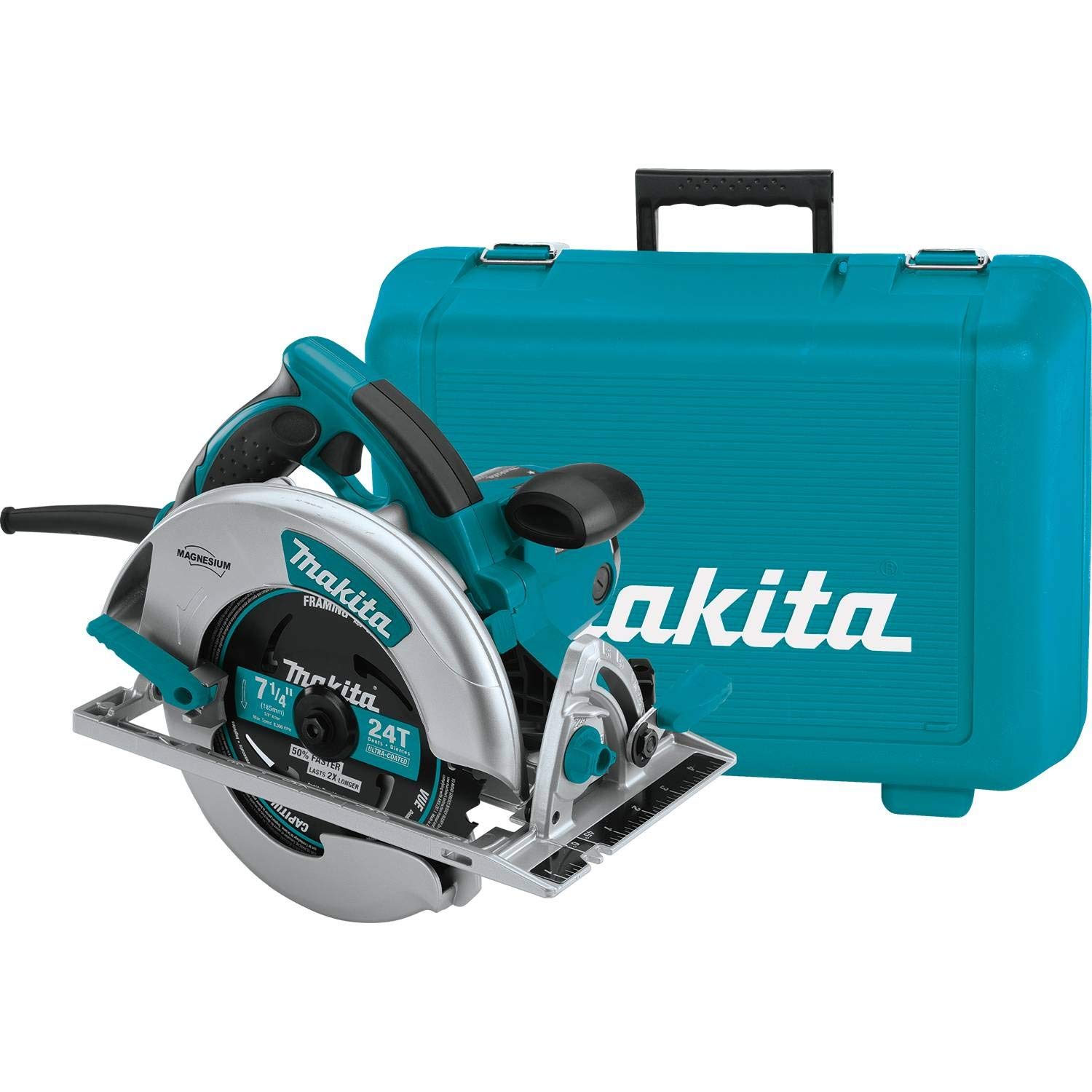
- Makita 5007MGA magnesium circular saw. A 15 amp corded 7-1/4 inch saw at 5,800 RPM with an electric brake, listed at 10.6 pounds. Suits someone swapping regularly between a 24 tooth framing blade and a finer one.
- RIDGID R4518 table saw. A folding stand saw with 27 inches of rip capacity and a 4 second blade brake. Suits a user who keeps a dedicated rip blade fitted.
- Ryobi TSS121 12 inch sliding compound miter saw. 15 amps with a laser guide, table extensions and an electric brake. Suits trim work, where a high tooth count negative hook blade earns its keep.
- Milwaukee 6370-20 metal cutting circular saw. Cermet tipped dry cutting with chip containment. Suits steel studs and strut rather than wood.
Browse the wider ranges in circular saws and miter saws, or read how the two handheld options compare in circular saw versus track saw.
Frequently asked questions
Does a higher tooth count always cut cleaner?
Only up to the point where the gullets can still clear the waste. In a deep rip a high tooth count blade packs, heats and burns, so the finish gets worse rather than better.
Can one blade do everything?
A 40 to 50 tooth combination blade is the usual compromise and handles most general work acceptably. It will not match a dedicated rip blade for speed or a dedicated crosscut blade for finish.
Which face tears out?
Teeth exit through the top face on a handheld circular saw or jigsaw, so cut with the good face down. On a table saw or a miter saw the teeth exit downward, so the good face goes up.